
The Rise of Logistics Automation Software
A new wave of software has arrived in the supply chain tech stack, promising to help brokers, forwarders, 3PLs, and more to automate workflows, speed-up response times, and reduce errors.
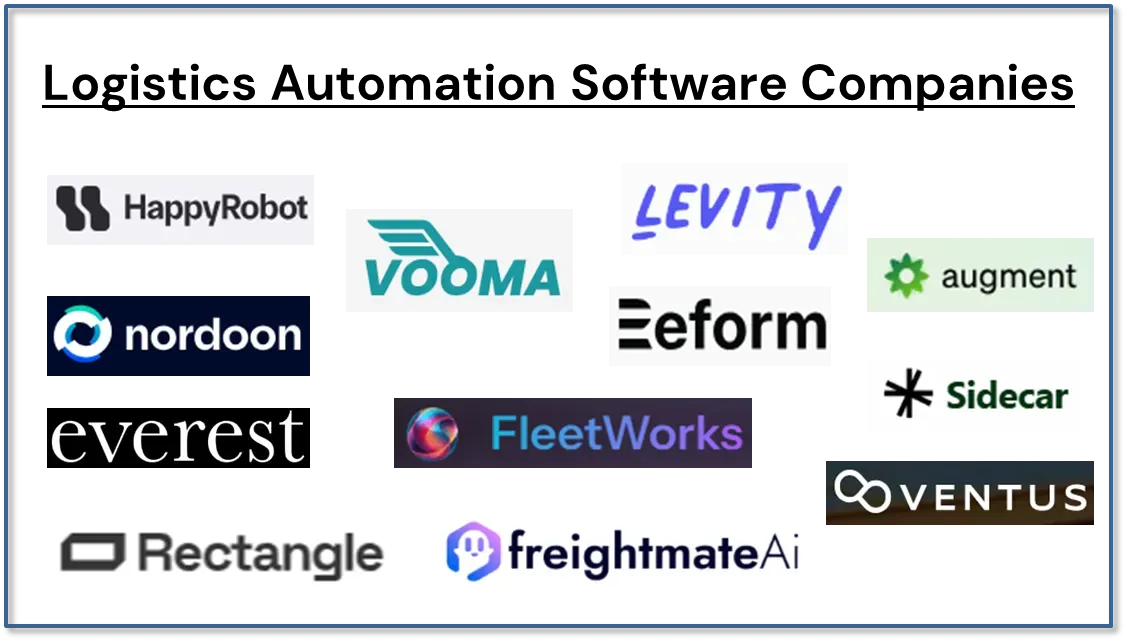
These platforms are purpose-built for logistics, providing:
- Native integration to your inbox
- Pre-configured workflows for logistics
- Pre-built connections with other leading logistics software tools
This is a dynamic and fast changing market:
- 8 of the 12 companies on this list were founded within the last 2 years
- 80+% of funding listed has been raised within just the past 6 months
What’s next?
In a LinkedIn post earlier this year, I highlighted how changing technology was leading to a proliferation of new software offerings, which in turn could create downstream pressure for companies to choose the right partners and integrate the tools into operations in order to remain competitive. I think this is exactly what’s happening now.
If you want to take next steps, check out how to get started and the full company list.
The remainder of this article provides a deeper dive.
What is Logistics Automation Software?
If you follow AI content on social media, you may have seen posts like the one below, showing a web of interconnected nodes that can be your first “AI agent”.
These are always worth $5,000, but if you write something in the comments you can get it for free.

These workflows are typically built using N8N or Make.com, but recently automation platforms like these have exploded in popularity, with numerous offerings entering the market.
Many of the Logistics Automation Software solutions on our list offer “agentic” workflow builders similar to general automation platforms like N8N or Make.com, but tailored to logistics.
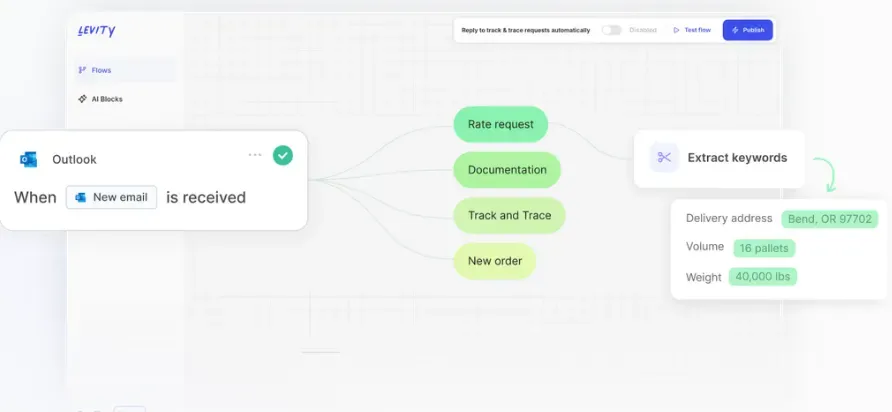
How Logistics Automation Platforms are Different from General Automation Platforms Like N8N or Make
When compared with general automation platforms, 3 points of differentiation I’ve noted are:
- Seamless integration with your inbox - including outlook widgets, and an analytics layer to extract higher level insights from your emails (# of quotes responded to, win-rate, etc.)
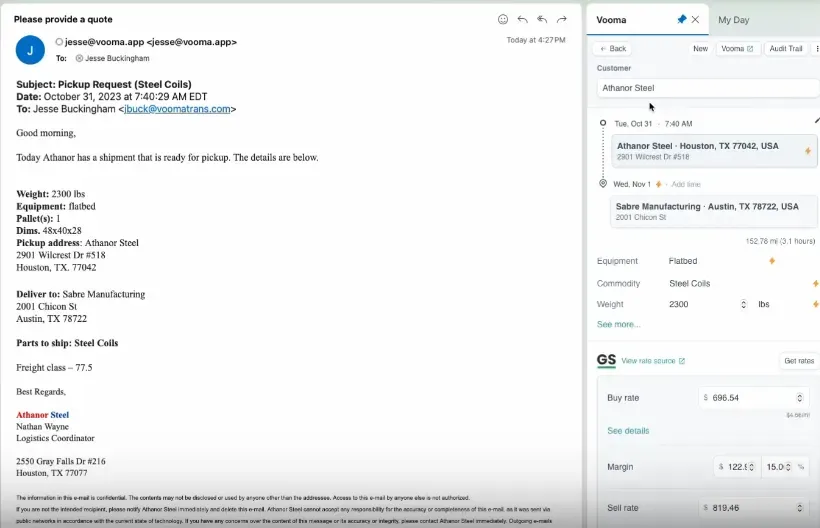
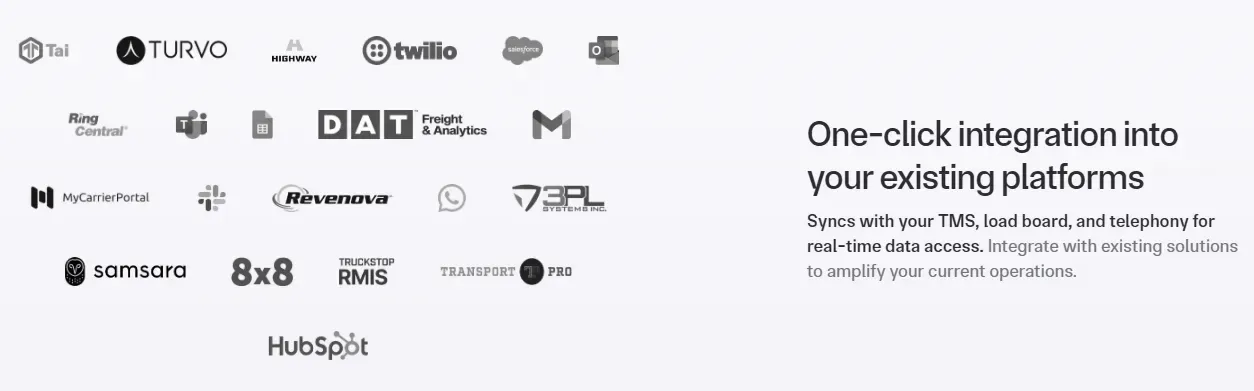
- Pre-built connections to other logistics management software - including your TMS, WMS, etc., these are integrations that you likely won’t find on general automation platforms.
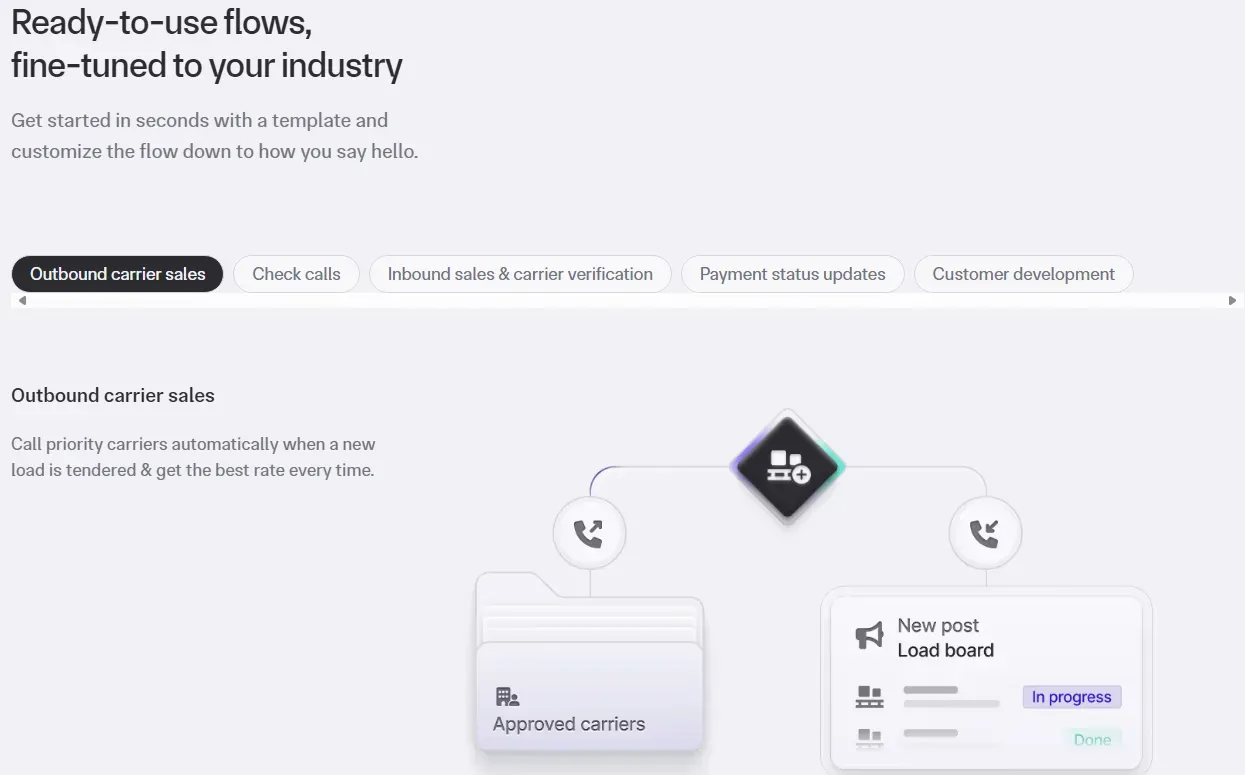
- Pre-built workflows for common logistics tasks - allowing you to simply adapt the workflows to your company rather than build from scratch.
That said, be sure to assess the specific workflows you would like to automate and compare the tradeoffs of selecting a logistics specific platform vs. building custom or using a general automation platform (many of which can be quite low cost).
Core Features of Logistics Automation Software
Generally speaking, the core features of logistics automation software are:
- Data Extraction - intelligently extract data from emails, pdfs, relevant systems etc.
- Data Management - move that data into other systems, use it to fill forms, etc.
- Email Automation - autonomously draft, send, reply to emails etc.
- Call Automation - AI agents that make or receive phone calls for tasks like carrier selection, scheduling, check-ins, etc.
Target Workflows for Automation
Below, you'll find a selection of "Use Cases" from several providers that I feel clearly showcase the possibilities.
From Vooma (the videos linked do a nice job of illustrating different use cases):
From Augment (listed in their Q&A):
- Automated Spot Quoting & Rate Confirmations
- Shipment Planning (TMS)
- Appointment Scheduling
- Shipment Track & Trace
- POD & Document Collection
- AR Collections to reduce DSO
- Manage Carrier Communications (Email, Voice & Text)
- Carrier Onboarding, Compliance and Performance KPIs
- Carrier capacity Planning & Dispatch
- Shipper Case-management (Email, TMS & CRM)
- Agent / Contractor Helpdesk
- Audit & Claims Support
- AP Management
From Reform (on their homepage):
- Warehouse receipt data-entry
- Shipment delivery notifications to export coordinators
- Shipper documentation validation and matching
- Pickup order matching to warehouse receipt
- EEI Filing with ACE for export declarations
- AP invoice automation
- Vendor statement reconciliation
- In-bond movement filings (CBP Form 7512)
- Formal customs clearance entry (CBP Form 7501)
- ISF (10+2) filing into ACE
- HS and HTC code lookup & classification
How to Get Started
Our team follows a 5-step process:
- Discovery - hold initial calls with key stakeholders to gather data and information that will be used in the workflow selection & ROI analysis phase.
- Workflow Selection & ROI Analysis - use prioritization frameworks to determine the top 2-5 workflows to automate, then estimate the ROI.
- Proof of Concept - build a lightweight, custom solution to fully or partially automate one of the target workflows (potentially using a general automation platform). The insight this will provide into costs, challenges, and key requirements to automate these workflows can help tremendously during step 4.
- Software / Tool Selection - establish criteria to support the business case and test different software and tools. Iterate, and select the go forward tech stack.
- Implementation & Beyond - implement the solution, measure the outcome, and establish controls to monitor the system long term.
You can email jesse@severalmillers.com or book a meeting here to get started.
| Company | Description | Founded | Funding |
|---|---|---|---|
| Levity | Originally a general automation platform, Levity pivoted to the logistics sector in recent years. They provide a platform to build automations including data extraction, email automation, call automation, and an analytics offering to provide insights from your inbox. | 2019 | $10M |
| Everest | Everest emphasizes connecting your email inbox to all of your systems, and includes an analytics offering to provide insights from your inbox. | May 2022 | Unknown |
| HappyRobot | HappyRobot provides a platform to build automations. High quality voice AI and call automation capabilities have been a differentiating factor, but they provide a full suite of automation and analytics capabilities. | Aug 2022 | $16.7M |
| Fleetworks | Fleetworks provides a platform to build automations with an emphasis on its voice AI and call automation. | Dec 2022 | $500K |
| Vooma | Vooma provides a platform to build automations including email and call automations. They emphasize their well-developed solutions for specific brokerage workflows (quote, build, schedule, track, etc.) | 2023 | $18.3M |
| Nordoon | Nordoon provides a platform specifically for data extraction workflows. Their specialization on this critical workflow differentiates them from other providers on this list. | 2023 | Unknown |
| Reform | Reform provides a platform to build automations. They emphasize data extraction and specific freight forwarding workflows including customs brokerage workflows. | 2023 | $2.6M |
| FreightmateAI | FreightmateAI emphasizes automation of data extraction and document management workflows for freight forwards, but has expressed plans to move into other areas as well. | May 2024 | $5.7M |
| Augment | Augment provides a platform to build automations including data extraction, email automation, and call automation for brokers, shippers, carriers, and 3PLs. | 2024 | $25M |
| Ventus | Ventus emphasizes automating data entry into any web portal, highlighting workflows such as processing orders, preparing customs entries, entering shipping details to load boards, etc. | 2024 | Unknown |
| Sidecar | Sidecar emphasizes automated workflows including data extraction, email automation, and call automation. | 2024 | Unknown |
| Rectangle | Rectangle emphasizes automating data extraction and data entry / management across systems. | 2024 | Unknown |